
— Time, as It Is
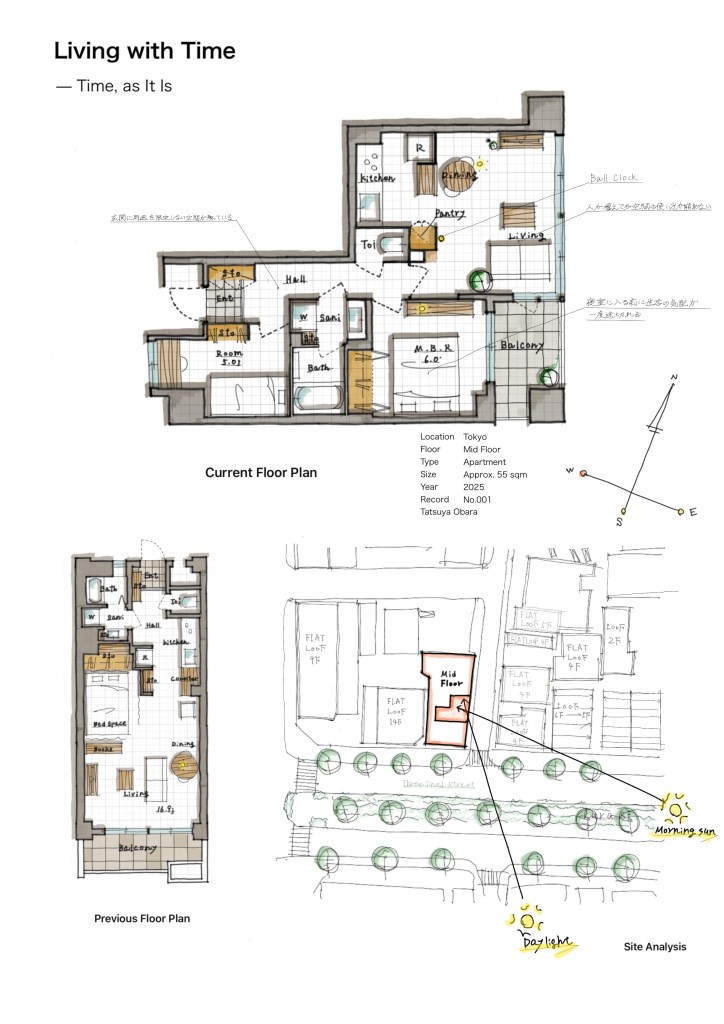
この間取りは、もともと出来上がっていた。
自分が設計したわけではないし、
条件を動かすこともできない。
前の住まいはワンルームだった。
一つの空間で、仕事も生活も完結していた。
シンプルで楽ではあったけれど、
切り替えが難しい場面もあった。
今回は2LDK。
部屋が増えた分、選択肢も増える。
ただ、選べるからといって、
すべてを決める必要はないと思った。
今の二人の生活に必要なものは、
この間取りの中に、だいたい収まっている。
動線も無理がなく、
普通に暮らす分には、特に困らない。
少しだけ余っている部屋がある。
今は使っていない。
仕事部屋にすることもできるし、
将来、子供部屋になるかもしれない。
でも、そのどれかに
今、決める理由はなかった。
だから、使い道は決めなかった。
空けたままにしておく、という判断をした。
光の入り方は、時間帯で変わる。
朝と夜で、同じ場所でも印象が違う。
間取りで生活をコントロールするより、
その日のリズムに合わせたほうが、
この家には合っている。
この間取りは、
暮らしを決めきるためのものではない。
今の生活をそのまま置いて、
変化が来たら、その時に考える。
それくらいの距離感が、
ちょうどいいと思った。
This layout was already complete.
I did not design it,
and the conditions could not be changed.
The previous home was a single-room apartment.
Work and daily life happened in the same space.
Simple and efficient,
but not always easy to switch modes.
This home is a 2LDK.
More rooms mean more options.
But more options do not require immediate decisions.
For two people,
the apartment already works well.
The flow is natural,
and daily life fits without effort.
There is one extra room.
It is unused for now.
It could become a workspace,
or perhaps a child’s room in the future.
There was no reason to decide yet.
So the decision was not to decide.
Light changes the rooms throughout the day.
Morning and evening feel different.
Rather than controlling life through the plan,
this home responds better to daily rhythms.
This is not a final answer.
It is a way of living with time,
as it is.
Tokyo / Upper Floor
Apartment / Mid-50s sqm
Late 2025
Record No.001
Tatsuya Obara
この図は、新居祝いとして贈られ、
いまもリビングに飾られています。
来客との会話が生まれることも、
想定して描かれた図です。
この記録は、
住まい・仕事場・店舗など、
「用途を決めきれない空間」を
どう成立させるかを整理したものです。
図面と空間の読み取りを、判断の構造として整理した記録。
.
 BACKYARD OFFICE